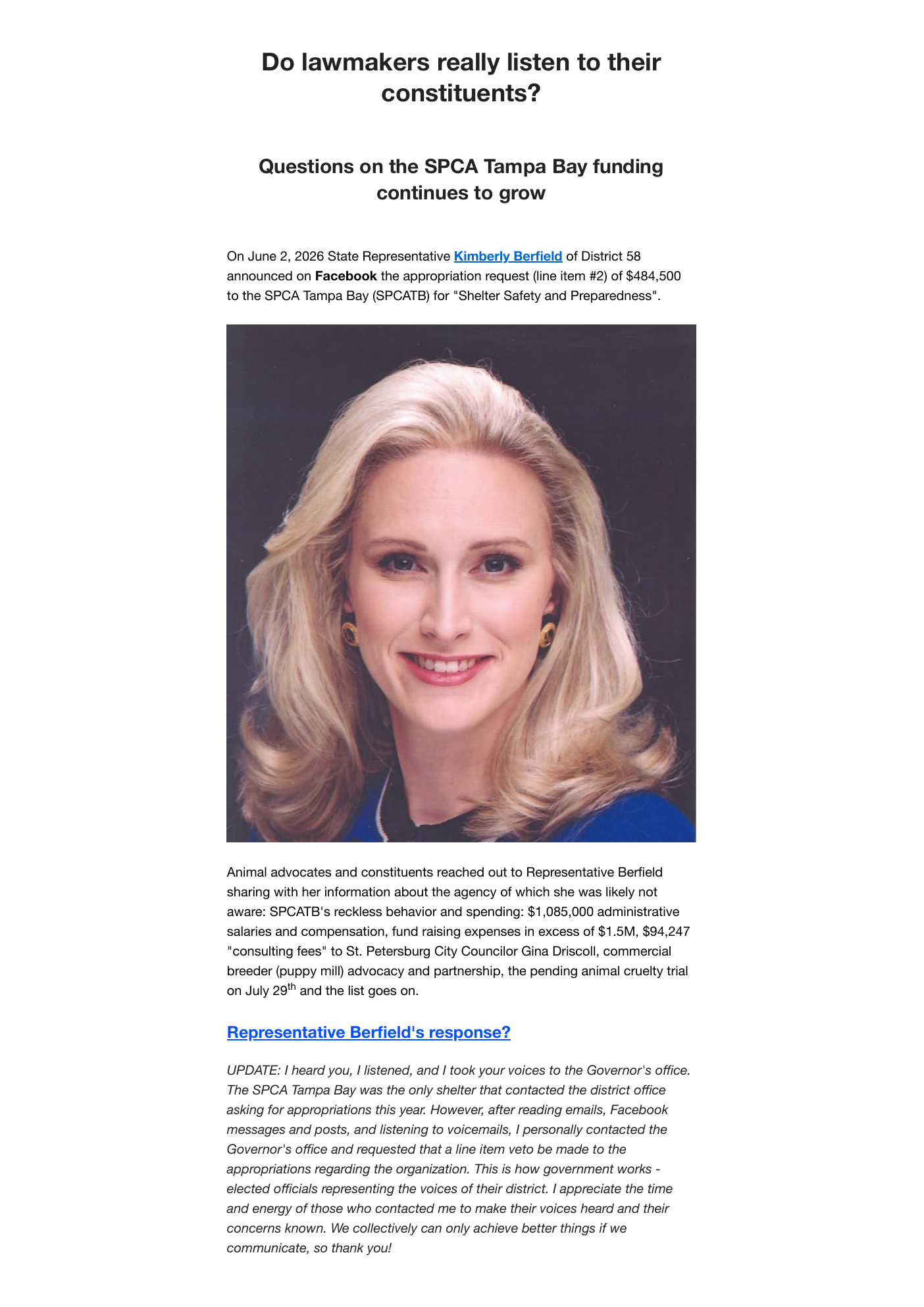
A proposed state appropriation
The broadcast says that on June 2, 2026, Florida State Representative Kimberly Berfield of District 58 announced a $484,500 appropriation request for SPCA Tampa Bay. The stated purpose was "Shelter Safety and Preparedness."
According to the broadcast, the proposed funding would support a perimeter security fence around approximately ten acres and a generator intended to improve shelter safety and resilience. The archive does not independently establish the final language, status, or disposition of the budget item; those details should be verified through official Florida budget and veto records.
Constituents raise objections
The broadcast says animal advocates and District 58 constituents contacted Representative Berfield by email, telephone, Facebook messages, and public posts. It states that they raised concerns about SPCA Tampa Bay's administrative compensation, fundraising expenses, consulting payments, commercial-breeding relationships, and the then-pending animal-cruelty case involving Waddles.
These descriptions reflect the newsletter authors' advocacy position. The broadcast does not provide a complete evidentiary record for every allegation, and this readable archive does not independently validate the stated figures or characterizations.
The representative's reported response
The original reproduces a statement attributed to Representative Berfield saying that she reviewed constituent emails, messages, posts, and voicemails and then personally asked the Governor's Office to make a line-item veto of the appropriation.
The statement says SPCA Tampa Bay was the only shelter that contacted the district office seeking an appropriation that year and describes the response as an example of elected officials representing the voices of their district.
The broadcast praises Berfield's action as responsive leadership. A request for a veto is distinct from a final veto decision, so the official budget record is necessary to determine what ultimately occurred.
Lobbying and access to the appropriations process
The broadcast explains that a nonprofit appropriation request generally requires legislative sponsors and argues that navigating the process can be difficult for smaller organizations. It says organizations with greater resources can hire Tallahassee lobbyists to advance funding requests.
The newsletter states that SPCA Tampa Bay paid $57,315 in lobbying costs during 2024 and identifies Corcoran Partners as an example of a lobbying firm involved with the organization. It further describes the lobbyist as a corporate sponsor of SPCA Tampa Bay.
Those financial and relationship claims are attributed to the broadcast. They should be evaluated against lobbying disclosures, contracts, sponsorship records, and nonprofit filings before conclusions are drawn about the work performed or the motives of any party.
The broadcast's "paying twice" argument
The authors argue that donors first fund lobbying activity and that taxpayers may then fund the requested appropriation. They characterize this as the public being separated from its money twice and question whether an organization described as having approximately $10 million in assets should receive the proposed state funding.
What information should lawmakers require before directing public money to a nonprofit organization?
The broadcast presents the arrangement as evidence of self-enrichment and misplaced priorities. Those are advocacy conclusions, not adjudicated findings. The existence of lobbying, a sponsorship, or an appropriation request does not by itself prove waste, corruption, self-dealing, or an improper exchange.
Questions about services and mission
The broadcast says SPCA Tampa Bay listed seven services on its website but claims that only "Surrender a Pet" and "Wildlife Assistance" were directly managed by the organization, while the remaining services involved referrals to government programs or outside businesses.
Service offerings, referral arrangements, and website descriptions can change. Readers should consult contemporaneous archived pages, current official information, and program records when assessing the accuracy or significance of that claim.
The broader public-accountability message
The central theme of the broadcast is that constituent communication can affect government decisions. It encourages taxpayers to examine nonprofit appropriations, ask how applicants use donor and public funds, and expect lawmakers to investigate the organizations they sponsor.
The original ends by thanking Representative Berfield and supplies her direct government email address and telephone number. The readable archive does not reproduce those contact details; readers wishing to contact an elected official should use the Florida House's current official directory.
Broadcast 03 — Do Lawmakers Really Listen to Their Constituents?
About the archived original
The original is a three-page special broadcast dated June 9, 2026. It includes a portrait of Representative Kimberly Berfield, a photograph of Waddles, an attributed constituent-response statement, claims about lobbying and organizational spending, direct contact information, and subscription material.
This readable version summarizes the document while preserving attribution, distinguishing a requested veto from a final government action, and avoiding unnecessary republication of direct contact details. The complete original PDF remains available for archival review.